Design Life-Cycle
assess.design.(don't)consume
Play-Doh Life Cycle Analysis
Ira Kushch
Professor Cogdell
DES 40a
March 12, 2026
A Materials-Focused Life Cycle Analysis of Play-Doh
Most people view Play-Doh as a simple, harmless product: soft colored dough in a small plastic container. Yet in that familiar plaything we find a vast and complicated network of land, resources, facilities and infrastructure that underpin so many aspects of our lives. A materials-focused life cycle analysis identifies the physical resources and significant events, organized by stage of the life cycle (resource extraction, production, transportation, use and end-of-life), and explains why some stages matter more than others for a given focus.
This paper is focused on the materials aspect of life cycle analysis of Play-Doh. The production of its ingredients is the largest component of the life cycle impact of the product (including environmental harms that occur upstream, before the product is purchased or discarded), as this product is a combination of farm-based ingredients, mined mineral additives, and petrochemical-based oils and plastics. The paper discusses how acquisition of raw materials and their processing become very important stages in shaping Play-Doh’s footprint, because farming inputs, mineral extraction and refining, and production of plastic concentrate much of the product’s resource use and associated industrial pollution.
Raw Materials Acquisition: Agricultural Inputs
Hasbro identified water, salt and flour as the primary ingredients of the dough, which means that agricultural ingredients are in the core of the product’s compound (Hasbro). This statement is supported by a Safety Data Sheet of Play-Doh, where wheat flour is identified as a major component and maize (corn) starch is listed as an additional ingredient (“Play-Doh,” Safety Data Sheet). Composition of materials in the Play-Doh represents the agricultural system rather than isolated substances. This means that wheat flour has its roots in grain which had to be grown using seed, fertiliser, water and pesticides and also the additional equipment, storage and transportation associated with farming infrastructure (Vocke). All these resources and inputs are part of the product’s acquisition stage even though they never appear in the final tub.
Corn starch further shows how “farm-based” and “minimally processed” are not the same thing. Like flour, corn starch is a product extracted and heavily processed from kernels, which involves multiple stages of wet-milling processes, like steeping, filtering and drying steps that require heavy machinery, significant amounts of water management and energy input (Galitsky et al.). Because starch must be separated and purified before it can be used in manufacturing, part of the “agricultural” stage includes industrial pre-processing (wet milling) that occurs before Play-Doh production begins. Considering that agricultural production is input-heavy, it plays a huge role in the materials life cycle, even when the final consumer product feels low-tech.
Raw Materials Acquisition: Salts, Minerals, and Industrial Additives
In addition to agricultural inputs, sodium chloride (NaCl) and calcium chloride (CaCl2) are listed in the SDS for Play-Doh (“Play-Doh,” Safety Data Sheet). Play-Doh manufacturing company, Hasbro, identifies salt as a key component of Play-Doh (Hasbro). Sodium chloride typically comes from mineral extraction such as mined rock salt deposits or producing salt from brines. Calcium chloride is generally produced from industrial processes and represents an additional chemical supply chain connected to mineral/industrial production. These salts may add stability and texture to the compound, but they also show that the raw materials stage of Play-Doh’s manufacturing goes beyond farming and into extractive and industrial systems.
The SDS also lists mineral-derived additives like titanium dioxide and mica (“Play-Doh,” Safety Data Sheet). These additives are often used to adjust appearance (color, opacity, texture). Titanium dioxide (TiO2) is closely tied to mining and mineral processing. The U.S. Geological Survey (USGS) reports that more than 95% of the world’s titanium mineral concentrates are used to produce pigment-grade titanium dioxide, highlighting how pigment demand drives upstream extraction and refining (U.S. Geological Survey, Titanium Mineral Concentrates). Similarly, pigments that are used in even small percentages of a finished product can be connected to complex systems of extraction, processing, chemical conversion, and finishing, the environmental effects of which occur far removed from end-use products and consumers.
Play-Doh also contains industrial carbon-based and petroleum-derived inputs. The SDS lists carbon black and white mineral oil, or petroleum, as constituents of the modeling compound Play-Doh. Carbon black is not a mineral derived from the earth but rather manufactured through a combustion process in which aromatic hydrocarbons are injected into a furnace at high temperatures and the resulting soot is collected (U.S. Environmental Protection Agency, AP-42). Therefore the minor coloring agent contained in Play-Doh has a petrochemical and combustion background. The petroleum derived white mineral oil adds yet another crude oil and refinery process link to the children’s product. While in Play-Doh the mineral oil is used as a component to give the desired consistency to the modeling compound, in an LCA context it represents a new fossil resource input to this “flour based” product.
Taken together, these factors make raw material extraction the most important stage in the materials-focused life cycle analysis. Play-Doh’s materials are not sourced from a single system but from multiple, distinct extraction and processing networks—agriculture, mining/mineral processing, petrochemical refining, and industrial chemical manufacturing — each with its own infrastructure and upstream effects.
Manufacturing and Packaging
Play-Doh Manufacturing is where these various ingredients are combined, processed and transformed into a product ready for commercial sale. While the manufacturing process is not fully disclosed in the SDS, it does contain information about physical properties of the ingredients in the product. The fact that the Play-Doh is soluble in water points to a water-based vehicle in which the flour, starches, salts and pigments are incorporated in a binder to form a semi-solid plastic mass (“Play-Doh,” Safety Data Sheet). The broad steps in this manufacturing process would appear to be as follows: mixing and hydration of ingredients, dispersion of colorants and texture modifying additives, portioning and packaging to prevent moisture loss.
Packaging is also important as its purpose is to extend the product’s shelf life and to enable re-use, so we consider the packaging as part of the product material performance. Play-Doh’s usability depends on moisture content, and resealable containers help to slow drying and limit exposure to air, keeping the product malleable longer. A CBP ruling that describes Play-Doh products states that polypropylene (PP) is used for a plastic tub and linear low-density polyethylene (LLDPE) for the cap (U.S. Customs and Border Protection). These plastics are polyolefins that are produced through catalytic polymerisation, and then shaped via high volume molding processes. Even though the tub is small, it embeds Play-Doh in petrochemical material systems: fossil-derived feedstocks, industrial polymerization, and plastics processing.
Because the purpose of packaging is to extend the product’s shelf life by limiting moisture loss, we consider the packaging as part of the product material performance. This is an important consideration for a materials LCA for two reasons: packaging adds material mass and industrial sourcing, and it strongly influences end-of-life outcomes (especially whether PP/PE are clean enough to be captured for recycling).
Distribution and Transport
After manufacturing, Play-Doh enters distribution networks that add additional materials and rely on fuel-based transport. Consumer goods like this are usually shipped in large cardboard trays or “layers”, stacked into pallets and then covered and tied with plastic stretch films for warehouse and retail handling. These secondary and tertiary products (cardboard, films, pallets) add additional material throughput and can become waste depending on local recovery systems; corrugated cardboard is often recovered, while plastic films are more inconsistently captured and recycled (American Forest & Paper Association; Severson et al.). While there is no detailed logistics map for this brand of compound, this is usually the general pattern of materials associated with the handling of consumer products from point of origin (factory) to point of consumption (store, and then to the home of the ultimate consumer).
Transportation of Play-Doh also involves the use of a variety of fuels and transportation modes, like ocean, air and land shipping. Additional materials are needed as support materials to protect the product, as the packaging, or as materials used in the distribution of the product. From a materials perspective, distribution is not the largest component of Play-Doh’s ingredient mass, but it adds meaningful supporting materials (cartons, pallets, wrap) and connects the product to fuel-dependent transport infrastructure.
Use Phase
The use phase of Play-Doh is low in terms of new material input but it highly impacts the lifespan of the product and the quality of the waste at the end of life. In a typical use scenario, the Play-Doh is removed from its container, molded into different shapes and placed back into the container. After several uses, the Play-Doh tends to lose water over time resulting in hardening of the compound due to lack of moisture which is required for the dough-like state. This is purely a physical change where dehydration leads to hardness and shortening of the product’s lifespan. By extending the use of the product the need to discard it will arise less frequently. Additionally, keeping the container clean can increase the likelihood of recycling the plastic container.
End-of-Life: Waste, Recycling, and Material Recovery
Play-Doh can be broken down into two material streams at the end of its life, with differing potential for reuse: the compound and the packaging. Since the compound is made of flour, salt and water, along with other salts, colourants and small amounts of petrochemicals, it is usually thrown away as municipal solid waste when it dries out and becomes contaminated (“Play-Doh,” Safety Data Sheet). The compound is not designed for polymer recycling systems and usually does not have a standardized recovery pathway.
The packaging has a clearer technical potential for recycling. PP and PE-family plastics are recyclable when collected, sorted, washed and then re-melted and re-extruded into pellets ready for re-manufacture. However, the actual effectiveness of mechanically recycling packaging plastics can be highly dependent on the performance of the recycling system and on the nature of the material being processed. A major review of mechanical recycling of packaging plastics explains that mechanical recycling is important for circularity but is limited by factors including material degradation and inconsistent quality, as well as contamination and sorting constraints (Schyns and Shaver; Helms et al.). Residue, labels, mixtures of plastics, and local infrastructure can all affect whether the intended plastic materials in a Play-Doh container are recovered. If not recycled, the packaging usually enters landfill or incineration streams, leading to a loss of polymer material from circulation.
The end-of-life in the context of a materials-focused LCA is an important parameter, since it indicates the extent to which materials from the product can remain in the loop. While the majority of the dough thrown away will become waste, the fate of the plastics used for the packaging can vary depending on the condition of the plastics and on the efficiency of the recycling systems.
Conclusion
Despite appearing to be very simple, the materials life cycle analysis of Play-Doh reveals that its simplicity is nearly completely confined to its use phase. According to Hasbro, the manufacturer of the iconic toy modeling compound, the formula for Play-Doh is largely water, salt and flour, while the 2025 SDS identifies additional ingredients like wheat flour, maize starch, sodium chloride, calcium chloride, titanium dioxide, mica, carbon black, and white mineral oil (“Play-Doh,” Safety Data Sheet; Hasbro). These individual components of Play-Doh connect Play-Doh to various segments of different material supply chains — agriculture and processing for the bulk powder ingredients, extraction and processing of minerals for their color and salt pigments, and the petrochemical industry for the mineral oil and plastic materials used in the final formula. Packaging materials further connect Play-Doh to the polymer industry, with PP tubs and LLDPE lids documented in official trade classification (U.S. Customs and Border Protection).
This paper highlights raw-material acquisition and processing as the most important life-cycle stages from the materials perspective, as these stages include the material changes and the major upstream effects: farming inputs for agricultural ingredients, mining and refining for pigment minerals, and refinery/polymer production for petroleum-derived components. Distribution adds supporting materials and fuel-powered transport shaped by regulations such as the IMO 2020 sulfur limit (International Maritime Organization). Although the use phase of the product has the lowest amount of materials, it is however critical as it influences the life of the product and the state of packaging. In terms of end of life of the product, the compound composition of the product typically ends up in municipal solid waste, whereas packaging materials are polymers and are assumed to be recyclable, with the many barriers to recycling discussed by Schyns and Shaver in recycling research (Schyns and Shaver). Therefore, our case study on Play-Doh demonstrates how a familiar consumer product can represent a layered material system whose most significant material complexity and impacts occur upstream, before the product ever reaches a child’s hands.
Works Cited
American Forest & Paper Association. 2024 U.S. Paper and Cardboard Recycling Rates. Aug. 2025, https://www.afandpa.org/sites/default/files/2025-08/AFPA_RecyclingRatesHandout_August2025.pdf
Galitsky, Christina, et al. Wet Corn Milling Energy Guide. Lawrence Berkeley National Laboratory, 2003, https://www.energystar.gov/sites/default/files/buildings/tools/LBNL-52307.pdf
Hasbro. “What Are the Ingredients in Play-Doh?” Hasbro Consumer Care, updated 24 Oct. 2023, https://hasbro-new.custhelp.com/app/answers/detail/a_id/47/~/what-are-the-ingredients-in-play-doh%3F.
Helms, Bridget A., et al. “Complementary Roles for Mechanical and Solvent-Based Recycling of Plastics.” Proceedings of the National Academy of Sciences, vol. 120, no. 46, 2023, e2306902120, https://www.pnas.org/doi/10.1073/pnas.2306902120.
International Maritime Organization. “IMO 2020 – Cutting Sulphur Oxide Emissions.” IMO, https://www.imo.org/en/mediacentre/hottopics/pages/sulphur-2020.aspx.
“Play-Doh.” Safety Data Sheet, Hasbro, revised 4 Feb. 2025. Target, https://digitalcontent.target.com/vault/1768780800/CLOUD_8825b3a7-285c-4dce-a34e-80ab7507bb10.pdf.
Schyns, Zoé O. G., and Michael P. Shaver. “Mechanical Recycling of Packaging Plastics: A Review.” Macromolecular Rapid Communications, vol. 42, no. 3, Feb. 2021, e2000415. Wiley, https://doi.org/10.1002/marc.202000415.
Severson, Michael, et al. “Implications of Scale Up Flexible Plastic Packaging Recycling in the United States.” Waste Management, vol. 194, 15 Feb. 2025, pp. 186–195, https://doi.org/10.1016/j.wasman.2025.01.010
U.S. Customs and Border Protection. “The Tariff Classification of ‘F8133 Play-Doh Super Stretchy…’” Customs Rulings Online Search System (CROSS), ruling N328663, https://rulings.cbp.gov/ruling/n328663.
U.S. Environmental Protection Agency. “6.1 Carbon Black.” AP-42: Compilation of Air Emissions Factors, vol. 1, ch. 6, sec. 6.1, 1995, https://gaftp.epa.gov/ap42/ch06/s01/final/c06s01_1995.pdf.
U.S. Geological Survey. Titanium Mineral Concentrates. Mineral Commodity Summaries 2024, Jan. 2024, https://pubs.usgs.gov/periodicals/mcs2024/mcs2024-titanium-minerals.pdf.
Vocke, Gladys, et al. U.S. Wheat Production Practices, Costs, and Yields. Economic Research Service, U.S. Department of Agriculture, 2013, https://ers.usda.gov/sites/default/files/_laserfiche/publications/43783/39923_eib116.pdf.
Jimmy Dang
Professor Cogdell
DES 40a
March 12, 2026
An Energy-Focused Life Cycle Analysis on Play-Doh
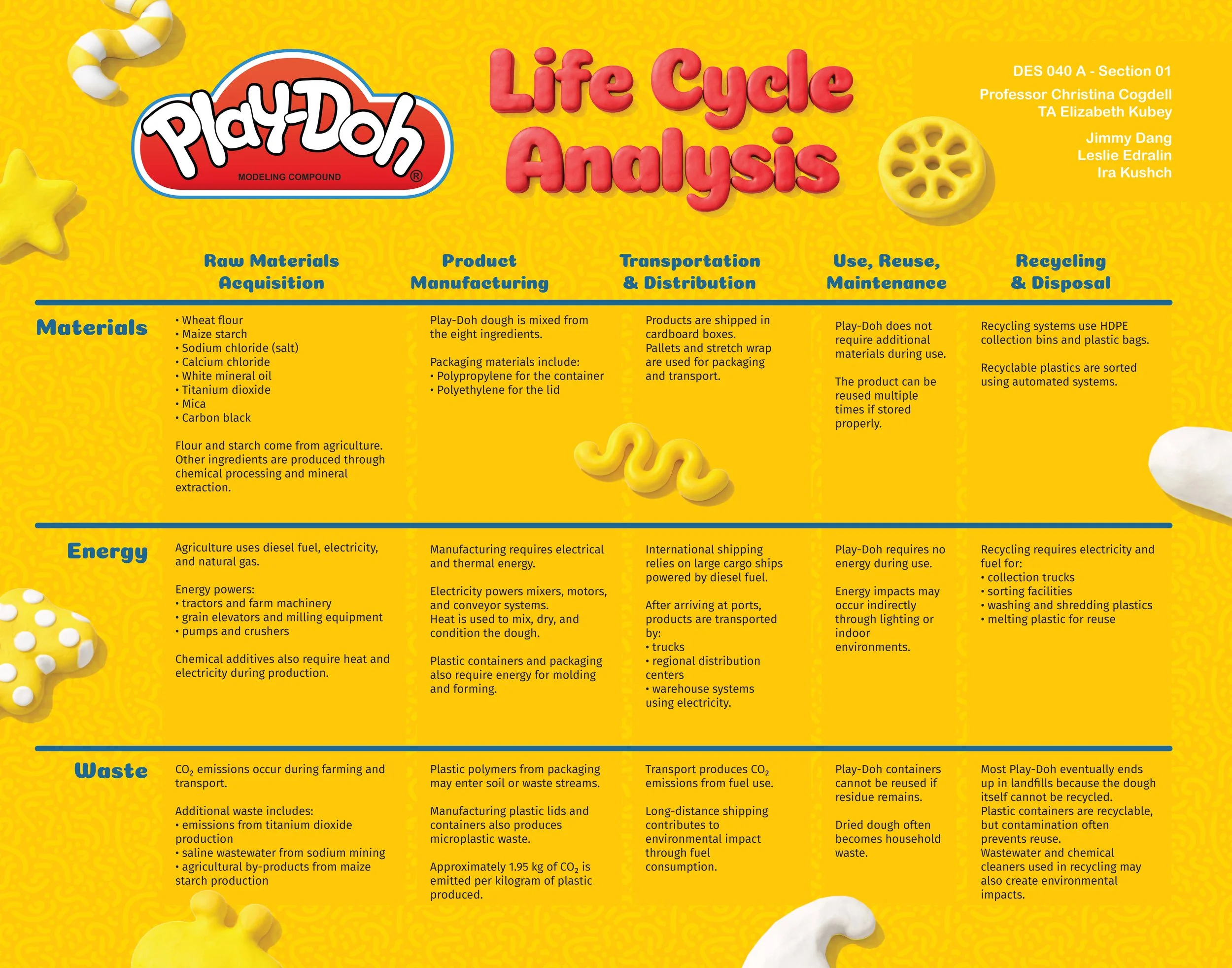
Play-Doh is a product that has been a staple in the homes of children and family alike for more than 50 years now. Initially originating in the 1930s as a product to clean soot off wallpaper, the playable dough has evolved throughout the years and become an icon as far as children’s toys and products go. The life cycle of Play-Doh is a fascinating subject, and that doesn’t just include the origins and evolution of the product over the last half-century, but also the modern day life cycle of the product, what it’s made of, how it’s made, and how it ends up in stores all across the world. This document will be an in-depth analysis on the life cycle of a standard tub of Play-Doh, and more specifically, it will be focused on the energy consumption found throughout Play-Doh’s various life cycle stages, including the Raw Acquisition of Materials, Product Manufacturing, Transportation & Distribution, Use, Reuse, & Maintenance, and lastly, Recycling & Disposal. Throughout the life cycle of a standard container of Play-Doh, energy use varies drastically, with some stages of its life cycle being far more energy-intensive than others.
The first stage in the life cycle of Play-Doh is the Raw Materials Acquisition. Play-Doh is made up of a variety of different materials. These include agricultural-based materials such as wheat flour and maize starch, and a variety of different ores and minerals, such as sodium chloride, calcium chloride, white mineral oil, titanium dioxide, mica, and carbon black. Play-Doh’s agricultural inputs use a variety of different energy sources, ranging from diesel fuel utilized by tractors and trucks, electricity in order to power grain elevators and wheat milling, and natural gas for dry grain and powering large-scale milling equipment. Salt and mineral based additives utilize sources such as electricity to power pumps and crushers and diesel fuel to power heavy duty equipment. Additionally, chemical additives and preservatives mixed within the dough compound itself also require their own energy sources for acquisition, namely thermal and electrical energy. The plastic making up the containers Play-Doh is stored and shipped in utilize both diesel and electric energy for crude oil and natural gas extractions, whereas electric and thermal energy are used in order to refine plastic polymers.
On the topic of electric and thermal energy, the next stage in the life cycle is Product Manufacturing. The aforementioned electrical and thermal energies are heavily utilized during this stage. The act of mixing and processing the dough compound often involves usage of electrical energy, powering motors that, in turn, power machines such as industrial mixers and conveyer belts. Meanwhile, thermal energy is used primarily to treat the dough compound. The dough is heated and conditioned, dried and stabilized, and heat is also used in order to control the dough’s moisture and sterilization. Play-Doh’s plastic containers, including both the plastic tubs and lids, as well as labels and cardboard boxes required for shipment, also utilize thermal and electrical energy for processes such as powering heavy duty hydraulics and the melting of plastic.
When it comes time to ship the products out to their intended destinations, that’s when the third stage of the life cycle, the Transportation & Distribution stage, begins. This stage primarily involves the usage of fuel-based energy. Long-distance shipping through usage of vehicles such as cargo ships require heavy usage of fuel oil, with other vehicles in the transportation process such as shipping trucks also utilizing diesel fuel in order to fuel the trucks themselves. Additional energy sources are also used when it comes to locations such as ports and warehouses, which vehicles may stop by during the shipping process. Locations such as warehouses and ports may also utilize electricity as a means to power a majority of their functions, such as lighting and use of machinery like conveyor belts.
Once products reach their intended destination, the life cycle enters its fourth stage, the Use, Reuse, and Maintenance stage. This is the stage most ordinary people experience, and it’s the simple process of actually buying a product from a store and utilizing it at home. Considering the fact that Play-Doh is a manual use product, there is essentially zero energy utilized during this phase, with there only really being indirect sources from outside factors such as a person’s home. As such, this stage of the life cycle is essentially a complete non factor as far as energy consumption goes, making it by far the least energy-intensive stage of the product’s life cycle.
When the product has been used thoroughly, or if something occurs to the product prematurely that results in it no longer being able to function properly, then the life cycle transitions into its final stage, Recycling & Disposal. The plastic containers of Play-Doh are recyclable, and their collection and recycling processes involve various energy sources. Fuel sources, such as diesel fuel, are used by collection trucks, with these trucks often transporting garbage and recyclable materials to proper facilities. Once the trucks arrive at these facilities, both electrical and thermal energy are used to power various processes within the facilities, including powering sorting machines and fueling the processes of washing, shredding, and melting down the plastic containers for reuse. As for the dough compound itself, it is unfortunately non-recyclable, nor is it biodegradable. As such, unlike the plastic containers containing the dough itself, the actual dough will more than likely end up at landfills amidst various other kinds of waste, where electrical energy may be used in order to power heavy duty machinery such as trash compactors, and thermal energy may be used to power incinerators, burning the dough entirely and reducing the space it takes up.
The results of the in depth research and analysis of Play-Doh’s energy consumption throughout its various life cycle stages has proven to be quite interesting. As previously mentioned, usage of energy varies a lot from stage to stage, with certain stages using an abundance of energy, whereas other stages use practically none at all. The main sources of energy consumption from Play-Doh’s life cycle seem to come from its earlier stages, namely both its Raw Materials Acquisition stage and its Product Manufacturing stage. Not only is a large abundance of energy utilized in both of these stages, but multiple different energy sources are also pulled from and utilized in order to power and fuel a variety of different machines and processes, including electrical energy, thermal energy, and fuel oils such as Diesel Fuel. A step down from these stages are Play-Doh’s Transportation & Distribution stages and Recycling & Disposal stages. These stages use less energy when compared to Play-Doh’s first two stages, with a primary source of energy mainly being used for a majority of these stages’ respective processes. Additional energy may be used from external sources in both of these stages, such as electricity usage of ports and warehouses in the Transportation stage, and diesel fuel to power collection trucks in the Recycling & Disposal stage. At the very bottom in regards to energy consumption is Play-Doh’s Use, Reuse, and Maintenance stage, which uses absolutely no energy as a result of Play-Doh being a physical, hands-on product, barring external factors such as the electricity from a person’s home.
Looking at the energy utilized throughout these various stages, the clear observation is that Play-Doh’s life cycle is most energy-intensive in its starting stages, with energy consumption lowering as the product progresses further into its life cycle.
For a product that consumes an immense amount of energy in its starting phases, it’s rather interesting to see that all of that energy utilized ends up creating a product that uses practically none at all.
Works Cited
Civil Aviation Fuel: Jet Fuel Specifications. Shell Global. (2025, November 20). https://www.shell.com/business-customers/aviation/aviation-fuel/civil-jet-fuel-grades.html
Diesel Fuel Explained - Use of Diesel. Energy Information Administration . (2019, August 29). https://www.eia.gov/energyexplained/diesel-fuel/use-of-diesel.php
Karali, N., Nina, K., & Nihar, S. (2024, April). Climate Impact of Primary Plastic Production . Berkeley Lab. https://eta.lbl.gov/publications/climate-impact-primary-plastic
Jimenez, G. (2025, October 1). Toy Factories’ Environmental Impact: Pollution, Waste, And Sustainability Challenges. Shun Waste. https://shunwaste.com/article/how-do-toy-factories-affect-the-environment
Yamane, Y., & Kayo, C. (2025, March 7). Environmental impact assessment of toys toward sustainable toy production and consumption in Japan. MDPI. https://www.mdpi.com/2071-1050/17/6/2351
Malpass, D. (2010, June). Introduction to Industrial Polyethylene : Properties, Catalysts, Processes. New Orleans; Wiley. https://www.eng.uc.edu/~beaucag/Classes/Properties/Books/Dennis%20Malpass%20-%20Introduction%20to%20Industrial%20Polyethylene_%20Properties%2C%20Catalysts%2C%20and%20Processes%20%28Wiley-Scrivener%29%20%282010%29%20-%20libgen.lc.pdf
Uria-Martinez, R., Leiby, P., Corbett, J., & Wang, Z. (2021, August). Primer on the Cost of Marine Fuels Complaint with IMO 2020 Rule. Oak Ridge; Oak Ridge National Laboratory. https://info.ornl.gov/sites/publications/Files/Pub160859.pdf
OECD. (2023, May). Climate Change and Plastics Pollution - Synergies Between Two Crucial Environmental Challenges. Paris. https://www.oecd.org/content/dam/oecd/en/publications/reports/2023/05/climate-change-and-plastics_d3364145/5e0bfe87-en.pdf
EPA. (2023, December). Documentation for Greenhouse Gas Emission and Energy Factors Used in the Waste Reduction Model (WARM) - Containers, Packaging, and Non-Durable Good Materials Chapters. Washington. https://www.epa.gov/system/files/documents/2023-12/warm_containers_packaging_and_non-durable_goods_materials_v16_dec.pdf
Newton, E. (2022, December 14). Energy Consumption in the Packaging Industry Impacts Sustainability Efforts. Energy Central. https://www.energycentral.com/energy-biz/post/energy-consumption-packaging-industry-impacts-sustainability-efforts-ofNEbi1t1NEglde
Leslie Edralin
Professor Cogdell
DES 40a
March 12, 2026
Playtime’s Over: Environmental Waste from Beloved Children’s Product
Play-Doh functions as a widespread consumer product aimed toward young children, often featuring moldable clay that can be easily manipulated by younger bodies and also utilized as an educational device from early institutional grades. When considering the cradle to grave analysis of Play-Doh, the majority of waste consumed by the creation, use, and disposal of Play-Doh, lies in the acquisition of raw materials, CO2 emissions, as well as mixed results on the efficacy of recycling Play-Doh both for itself and in other materials. In essence, if climate change is “A death by a million cuts” , Play-Doh's production is simply one of those millions.
One of the core materials needed to produce play-doh is flour and water (Brunning). Starch, being derived from wheat flour, has its own intricate processes and of course waste products as a result of said process. According to an excerpt by the University of Southern California, the agricultural soil management in the U.S represents 53% of the nation’s CO2 production, releasing 245 teragrams in 2010 (Kelly). Wheat, by its own, is responsible for 18 +/- 5.4 billion kilograms of C02 emissions in 2010. It should be noted that, in this article from 2014, near the end it asserts that the U.S has been moving toward decarbonization and renewable energy, although considering the current U.S administration in 2026 and its push towards coal energy again, it’s not hard to believe their optimistic outlook may be skewed compared to today’s output.
Another material necessary in Play-Doh’s creation is sodium chloride, to dehydrate the mixture of flour and water to prevent mold. In order to prepare sodium chloride for industrial use, it needs to be refined, with water being a core component, as a consequence, said water becomes saline wastewater which results in environment issues such as soil acidification, destruction of vegetation, aquatic imbalance, and threats to marine life (Chuqi). Due to this, there have been attempts at recycling said wastewater by at least separating the sodium sulfate and sodium chloride, to at least allow for recovering an upcycling of saline waste.
Another material, core to the production of Play-Doh is Titanium Dioxide, which functions as a pigmenting material. In an assessment by the International Association for Impact Assessment (IAIA) in 2024, the pigment industry was responsible for ninety percent of TiO2 consumption. In that same assessment, a lifecycle analysis was created to analyze the environmental impacts of the pigment’s production. Producing TiO2 is split between two routes, a sulphate and chloride route, the former being far more costly with a 4.94 milligrams of hazardous waste and 670k milliliters of wastewater to produce 1kg of TiO2, and the latter at 1.4 milligrams of hazardous waste and 246k milliliters of wastewater. This does assume that both routes produce a similar quality in TiO2. Similar to Sodium Chloride production, TiO2 does also affect aquatic sources, eco-toxic freshwater impacts, marine eco-toxicity. Interestingly, both routes produce less C02 during transportation than the industry standard, sulphate and chloride at a respective 3.69 and 3.76kg CO2/kg TiO2 in comparison to the expected 5.3t CO2/ t TiO2. Optimistically, the assessment concludes that 1. Technological advances in power optimization, although on the other hand 2. The study did not consider the CO2 consumption during packaging and delivery.
When it comes to the consumer level of producing playdough (transporting, containing, packaging), Play-Doh does source many environmentally impacting materials, firstly, being Polypropylene (PP), used in the plastic containers that house the children’s product. According to the International Conference on Applied Research and Engineering, PP composes 16% of the plastics industry. In an excerpt by the conference, it was found that attempting to combine PP with biodegradable polymers led to impurities that required undesirable impacts during the recycling process. The excerpt asserts that 1.34kg CO2 is produced per kilogram of PP. It was also found that only 1% of post consumer PP is recycled, the article concludes that this is as consequence of lack of legislative action. PP takes up to thirty years to degrade nurturing and attempts to dispose of it via incineration can result in the release of toxins like chloride and dioxins. The excerpt concludes with the fact that the majority of recycled PP is from packaging, that alone is not enough to achieve circular material flow. To draw back to Play-Doh, this issue is exasperated by the fact that Play-Doh can’ t be recycled if there’s left over residue, at risk of molding, and near the consumer end of life status, play-doh tends to lose its malleability
In the case of mass consumer transportation, the cardboard boxes that house play-doh containers amidst movement also have their own unique environmental impact. While paper products are generally the waste with the most effective recycling rates (Marina), depending on the handling processes, unusable and unwanted materials within paper, such as dyes, coatings, and other impurities can lead to complications in the recycling process and carryover into newly produced paper products. Overtime, said paper can contain hazardous waste, which, according to the article by Marina, asserts that “These are primarily linked to the printing industry and may contain numerous hazardous chemical substances.”. Another issue with cardboard recycling is the presence of ink within the paper material, also reducing its quality. The article by Marina conducted an experiment which used methods to de-ink the components of paper material. When compared to paper material that was not de-inked, de-inked composed paper exhibited higher brightness values.
As we’ve seen by these various materials, recycling tends to form a major obstacle during the lifecycle of Play-Doh and its components. According to Hasbro, the current owners behind the Play-Doh brand and its production “It’s in the DNA of our company to operate responsibly in our communities and protect the environment.” (Jessica) In that same article Jessica, she notes Hasbro’s statement of switching from PVC to PET, a more environmentally friendly plastic that is recyclable. In that same vein, Hasbro has also tried to reuse plastic waste into public architecture, namely entities such as flower pots and park benches (North).
Purification is a necessary step in the process of recycling plastics. During the process of washing and reprocessing plastic, facilities will use synthetic detergents (“The Plastic). These synthetic detergents, despite their usage in recycling plastic for environmental reasons, also have their own environmental issues, mainly wastewater flow and altering the chemical properties of surface waters. This can affect aquatic fauna and flora, as well as contaminate rivers and oceans (Kanyama). It’s noted that, during the COVID-19 pandemic highlighted a greater increase in human impact on aquatic ecosystems.
On the topic of architecture, a University of Tabuk article from the departments of Industrial and Civil engineering explored the possibilities and impacts of combining polypropylene plastics and pellets into concrete mixtures. The effect of this lies in 1. Finding alternative uses of unwanted plastics outside of trash heaps, and 2. Also fixing the issue of concrete’s high consumption of natural resources. The University of Tabuk article found that integrating plastic waste into concrete improved its tensile strength and flexibility, a critical aspect for the construction of bridges, pavements, and high stress structures. It’s very possible that, in near future, the play-doh cup a child interacts with may be composed in the office they work in as an adult. Of all the waste products and the methods and experiments necessary to recycle them, this process has shown to be the most optimistic and effective strategy.
In essence there’s a lot of work to be done in regards to the waste produced by Play-Doh. As fun and easy as it would be to criticize the average corporation, in truth, there’s not much they can do unless Hasbro wants to make an entirely different product. The raw materials needed to make the children’s material as safe and fun to use have so many layers of products upon products, not to mention the likely high amounts of CO2 waste produced through sheer numbers of transportation. This is what’s being referred to when citing Play-Doh as one of the millions of cuts into the planet’s environmental health. Play-Doh is a product, in a literal and metaphorical sense. It draws from so many established industries ranging from plastics to pigments, consumer products that will always be in high demand. Again, as easy as it would be to criticize the corpo elements, the industrial sector alone needs to be analyzed. More effective methods of acquisition and recycling need to be found before we start telling the overworked pre-school teacher to buy less Pay-Doh.
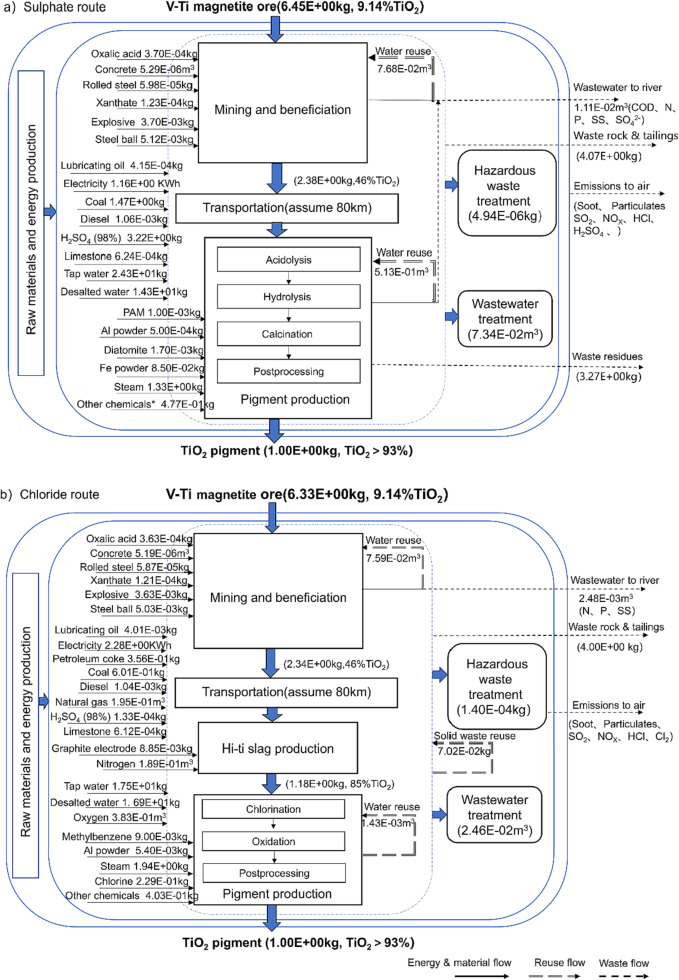
Illustration of Titanium Oxide Lifecycle analysis (Dai).
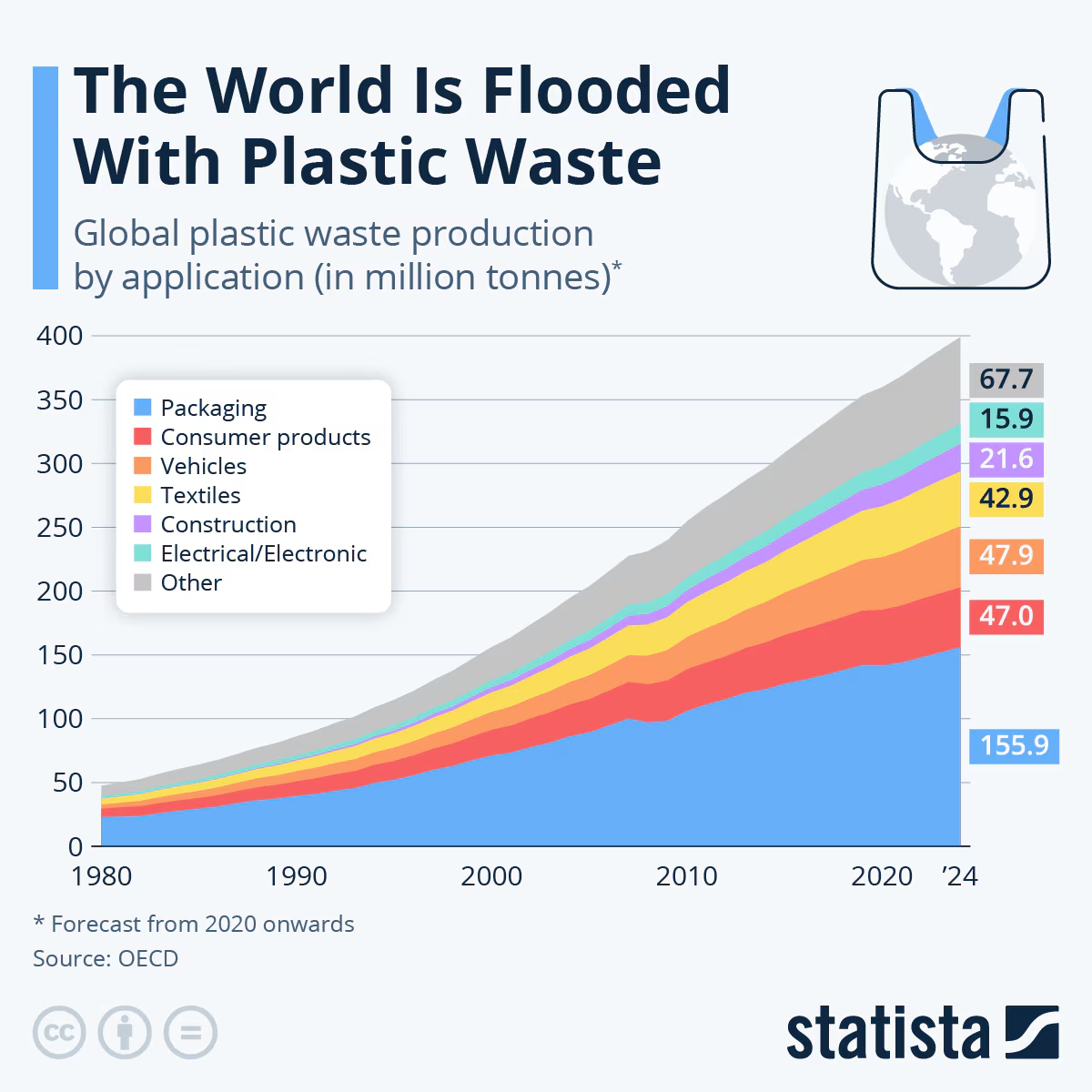
Graph featured in World Economic Forum (North)
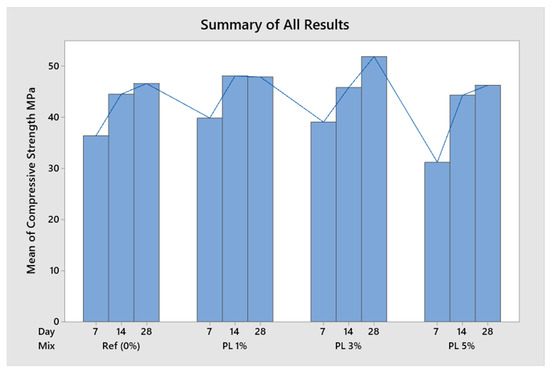
Presence of PP in concrete mix as a function of Concrete’s compressive strength (Alnahas).
Works Cited
Alnahas, J., Lakhouit, A., Alnchiwati, M., Albalawi, M., Elrazzaz, A., Alanzi, N., . . . Hijry, H. M. (2025). Enhancing the properties of concrete with the incorporation of recycled polypropylene plastic. Buildings, 15(7), 1055. doi:https://doi.org/10.3390/buildings15071055
Alsabri, Amzan, et al. "Environmental impacts of polypropylene (PP) production and prospects of its recycling in the GCC region." ScienceDirect, Elsevier B.V, Nov. 2021, www.sciencedirect.com/science/article/pii/S2214785321075969. Accessed 11 Feb. 2026.
Brunning, Andy. "Periodic Graphics: What is Play-Doh made of?" C&EN, ACS, 26 Sept. 2021, cen.acs.org/materials/Periodic-Graphics-Play-Doh-made/99/i35. Accessed 10 Mar. 2026.
Chuqi, Wang, et al. "Combined Frozen Crystallization and Stepwise Decompression Evaporation for Na2SO4/NaCl Separation from Mixed Salts." Recycling, vol. 10, no. 3, 2025, pp. 106. ProQuest, https://www.proquest.com/scholarly-journals/combined-frozen-crystallization-stepwise/docview/3223938797/se-2, doi:https://doi.org/10.3390/recycling10030106.
Dai, Yue, et al. "Life cycle environmental impact assessment of titanium dioxide production in China." ScienceDirect, Elsevier B.V, Mar. 2024, www.sciencedirect.com/science/article/abs/pii/S0195925523003785. Accessed 11 Feb. 2026.
Firger, Jessice. "At Hasbro, Sustainability Is Essential to Child's Play." Newsweek, 14 Dec. 2017, www.newsweek.com/green-rankings-2017-hasbro-toys-sustainability-eco-friendly-green-rankings-2017-747737. Accessed 11 Feb. 2026.
Kanyama, Takahide, et al. "Natural Soap is Clinically Effective and Less Toxic and More Biodegradable in Aquatic Organisms and Human Skin Cells than Synthetic Detergents." PLoS One, vol. 20, no. 6, 2025. ProQuest, https://www.proquest.com/scholarly-journals/natural-soap-is-clinically-effective-less-toxic/docview/3222295714/se-2, doi:https://doi.org/10.1371/journal.pone.0324842.
Kelly, Twomey S., and Michael E. Webber. "A Comparative Analysis of the Greenhouse Gas Emissions Intensity of Wheat and Beef in the United States." Environmental Research Letters, vol. 9, no. 4, 2014. ProQuest, https://www.proquest.com/scholarly-journals/comparative-analysis-greenhouse-gas-emissions/docview/2550669559/se-2, doi:https://doi.org/10.1088/1748-9326/9/4/044011.
Marina, Vukoje, and Bota Josip. "Effect of PCL Nanocomposite Coatings on the Recyclability of Paperboard Packaging." Recycling, vol. 10, no. 2, 2025, pp. 53. ProQuest, https://www.proquest.com/scholarly-journals/effect-pcl-nanocomposite-coatings-on/docview/3194639882/se-2, doi:https://doi.org/10.3390/recycling10020053.
North, Madeline. "Can toys go green? Here's how 5 major companies plan to make their products nature positive." World Economic Forum, 28 Oct. 2024, www.weforum.org/stories/2024/10/sustainable-toys-green-plastic-barbie-lego/. Accessed 11 Feb. 2026.
"The Plastic Recycling Process." Association of Plastic Recyclers, APR, plasticsrecycling.org/how-recycling-works/the-plastic-recycling-process/. Accessed 10 Mar. 2026.
Wasquez, Adan. "Play-Doh Life Cycle." Prezi, 9 Mar. 2015, prezi.com/agedg-xwjwcl/play-doh-life-cycle/. Accessed 11 Feb. 2026.